History & Heritage
4 min read
The Eight Flags of Amelia Island
Eight flags have flown over Amelia Island, from France to the Confederacy. Here is the story in order, and where you can still see it in Fernandina Beach.
Edited by First Coast Inn Editorial Team
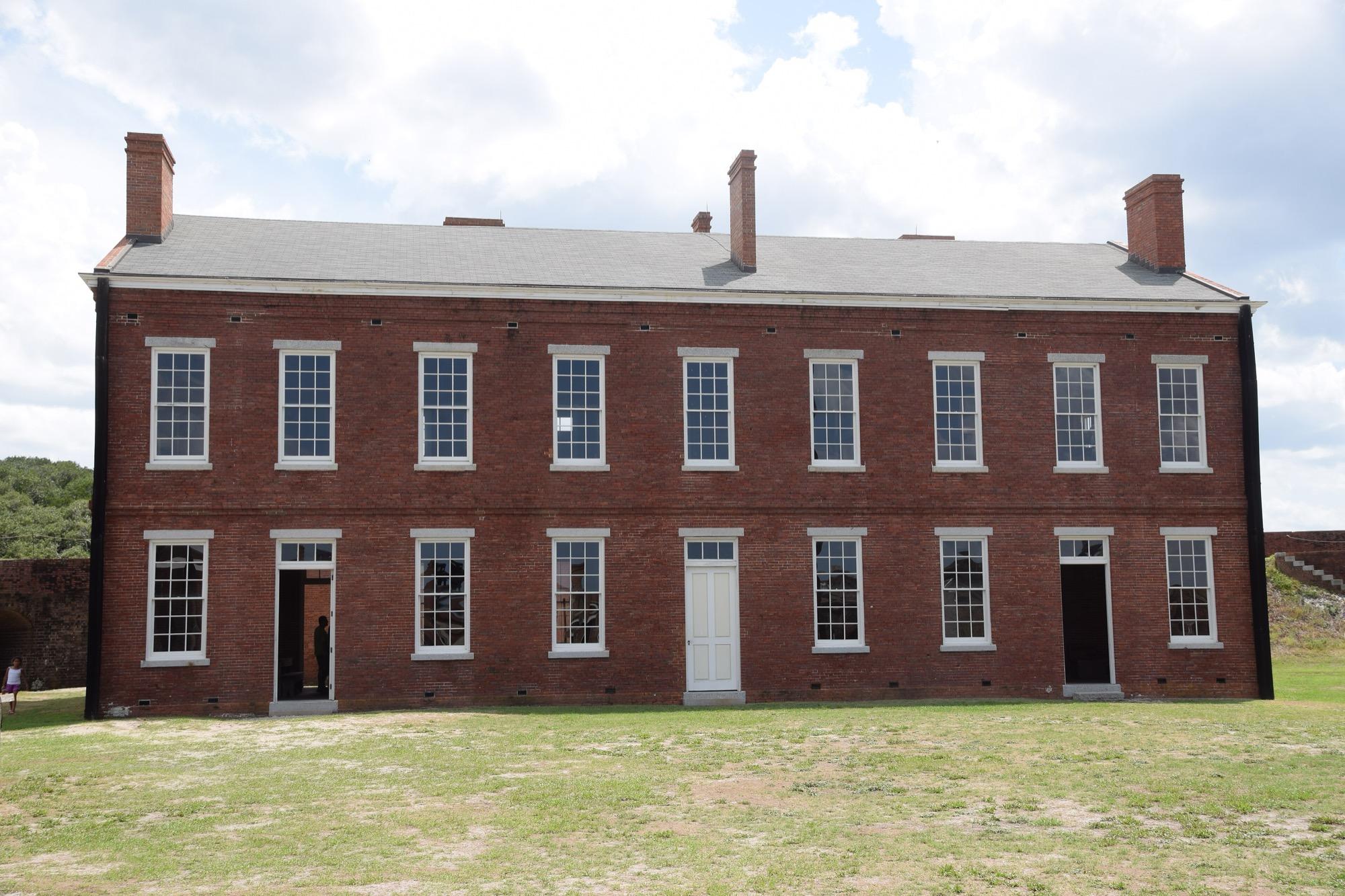
Photo by bubba73 on Wikimedia Commons · CC BY-SA 3.0
Eight flags have flown over Amelia Island. That is a lot of flags for one small island.
It changed hands through treaties, rebel landings and a civil war. This is the story in order, with a guide at the end for seeing it in person.
A quick note on dates. Historians do not always agree on exact years, especially for the earliest flags. Where that happens, we give the era and not a single year. Some of the colorful detail is local legend, and we say so when it is.
1. The French flag
The first flag came from France. In 1562, the French explorer Jean Ribault claimed this stretch of the coast for his country. A French colony took root in northeast Florida, and it did not last long. Spain drove the French out in the mid-1560s. Sources split on whether the French presence ended in 1564 or 1565, so think of it as the early 1560s.
2. The Spanish flag
Spain moved in next. In 1573, Franciscans established the Santa María mission on the island.
3. The British flag
Britain got its turn through a treaty. The Treaty of Paris in 1763 gave Britain control of Florida.
Spain again, and a town on paper
The Second Treaty of Paris in 1783 gave Florida back to Spain. Spain's flag was back, but we count it only once in the total of eight. Fernandina was platted in 1811, still under Spanish rule.
4. The Patriots of Amelia Island
In 1812 and 1813, insurgents known as the Patriots of Amelia Island seized the island.
5. The Green Cross of Florida
In 1817, the men of Gregor MacGregor took Fort San Carlos, which had been built in 1816. They flew a banner called the Green Cross of Florida.
6. The Mexican rebel flag
Later in 1817, Luis Aury held the island under a Mexican rebel flag. Some tellings call his short rule a "republic." Take that label as part of the island's story, not as settled fact.
7. The Confederate flag, and 8. the United States flag
Florida became part of the United States in 1821, so the American flag was already part of the island's story before the Civil War. The flag count gets tangled here, and different sources order the last two flags in different ways. The simplest way to tell it is this.
On January 8, 1861, Confederate sympathizers took Fort Clinch. On March 3, 1862, the Union restored federal control, and the United States flag went back up.
So that is the list of eight: French, Spanish, British, Patriots of Amelia Island, Green Cross of Florida, Mexican rebel, Confederate and United States. The Shrimp Festival's own history page is the standard source for this list, and it is worth a read: shrimpfestival.com/the-history.
Why so many?
The treaties tell part of the answer. Britain, Spain and the United States all signed papers that moved Florida from one flag to another. The rest came from insurgents and rebels who landed on the island themselves, in 1812 and 1817 and again in 1861. Each group raised its own flag.
What is left to see today
The flags came down long ago, but three places in Fernandina Beach make the story easy to follow.
Fort Clinch. The brick fort stands at the north tip of the island, inside Fort Clinch State Park. It is the fort Confederate sympathizers took in January 1861. The red-brick officers' quarters in the photo at the top of this post are inside it. For current hours, entry fees and event dates, use the Fort Clinch State Park page. Our own Fort Clinch guide covers what to do once you are inside.
The Amelia Island Museum of History. It sits at 233 S. 3rd Street in Fernandina Beach. It is the place to go for the island's story. Hours, tour times and admission change, so check ameliamuseum.org before you go.
Centre Street. The main street of the historic district is a good place to walk and look for the details. Our guide to historic downtown Fernandina Beach covers the blocks, and our post on the Palace Saloon covers one of the best-known buildings on the street.
And then there is the name itself. "Isle of Eight Flags" shows up all over town, including in the name of the annual Shrimp Festival. Once you know the story, you will spot it on signs and storefronts.
Getting there from the hotel
The Best Western Plus First Coast Inn & Suites is in Yulee, on SR-200/A1A, less than half a mile east of I-95. Downtown Fernandina Beach is about 15 miles away, and so is the Fort Clinch gate. We sit just west of Fernandina, on the mainland side. Our things to do page covers more of the area, and the special offers page lists current rates and packages.
Planning a history weekend on Amelia Island? Check availability at the First Coast Inn & Suites.
FAQ
Common questions.
What are the eight flags of Amelia Island?
They are the French, Spanish, British, Patriots of Amelia Island, Green Cross of Florida, Mexican rebel, Confederate and United States flags. Spain flew its flag twice, but it is counted once.
Why is Amelia Island called the Isle of Eight Flags?
Eight different governments or groups have flown their flags over the island. The name is also part of the Isle of Eight Flags Shrimp Festival.
Where can I see Amelia Island's history today?
Start with Fort Clinch State Park at the north tip of the island, the Amelia Island Museum of History at 233 S. 3rd Street, and the Victorian blocks of Centre Street downtown. Check each official site for current hours and admission.
How far is Fort Clinch from the hotel?
The Fort Clinch gate is about 15 miles from the hotel. Downtown Fernandina Beach is also about 15 miles away. The hotel sits just west of Fernandina, less than half a mile east of I-95 on SR-200/A1A.
Planning a trip to the First Coast?
We’re about twenty-five minutes from Amelia Island’s beaches and thirteen miles from the Jacksonville airport.
Check Availability