Itinerary
13 min read
Two Days on Amelia Island for History Lovers
A time-blocked two-day plan for people who came for the fort, not the beach: Fort Clinch, a museum in the old county jail, a saloon that bills itself as Florida's oldest bar, and the tabby quarters at Kingsley Plantation. Built around what's actually open which day.
Edited by First Coast Inn Editorial Team
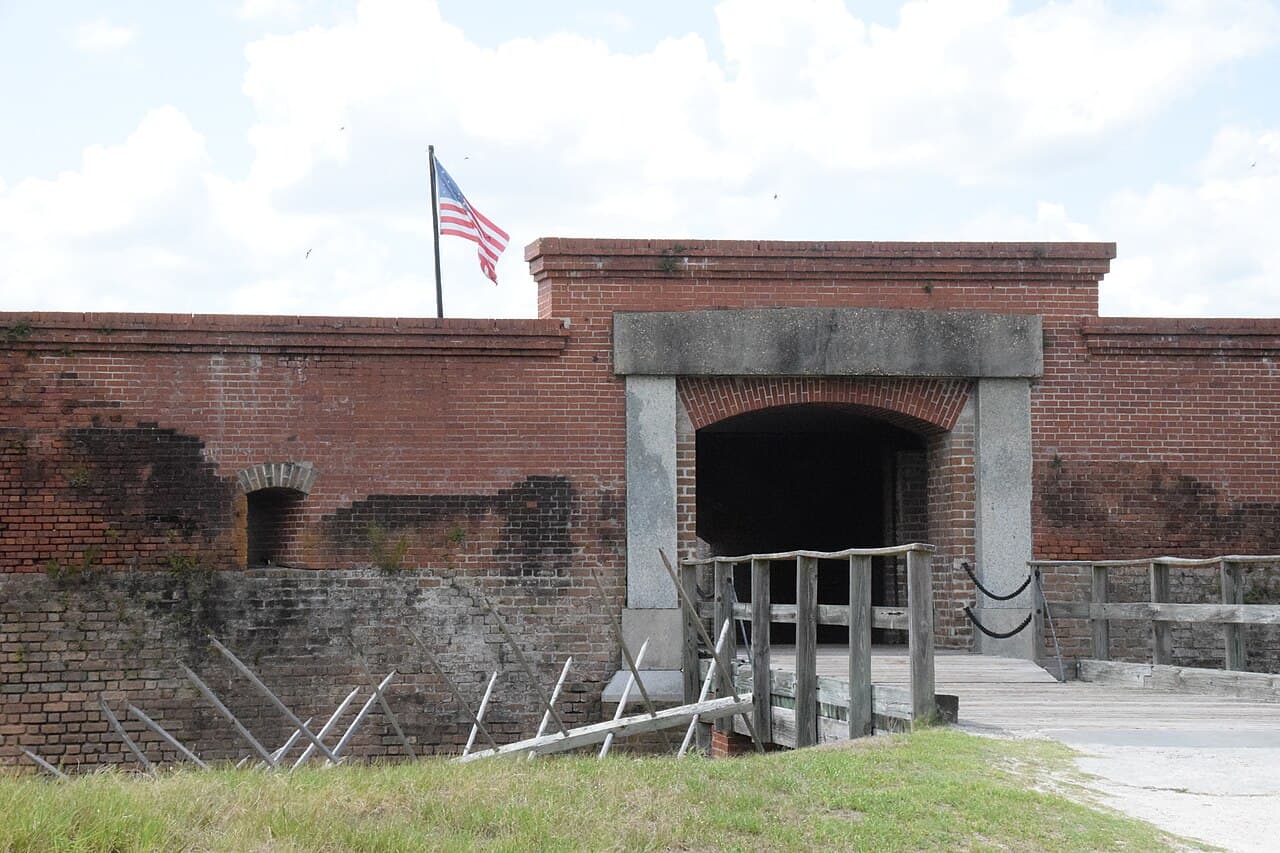
Photo by bubba73 on Wikimedia Commons · CC BY-SA 3.0
Most Amelia Island itineraries treat history as the rainy-day option. This one treats it as the reason you came.
Two days here buys you a nearly intact brick fortress at the top of the island, a museum in the old county jail, a bar that has been pouring since 1903, and, about 30 miles south, a National Park Service site where the tabby walls of the slave quarters are still standing. That is a substantial pair of days by any standard.
It is also easy to get wrong, and the reason has nothing to do with distance. The problem is opening hours. Three of the stops on this plan keep schedules that don't line up with each other, and one of them is closed two days a week.
Start with the calendar, not the map
Read this part before you book anything.
Kingsley Plantation's grounds are open 9 a.m. to 5 p.m., Wednesday through Sunday. Closed Monday and Tuesday, year-round. The National Park Service also closes every area of the Timucuan preserve on Thanksgiving, December 25 and January 1. If your two free days are a Monday and a Tuesday, day two of this itinerary does not exist, and that is much better to learn at home than at a gate on Fort George Island.
The Amelia Island Museum of History runs Monday through Saturday, 10 a.m. to 4 p.m., and Sunday 1 to 4 p.m. The Sunday window is three hours wide and includes exactly one docent tour. There are also free hours Friday from 4 to 6 p.m.
Fort Clinch is the flexible one. The park is open 8 a.m. to sunset, 365 days a year, and the park's page lists the fort's own hours. What varies is whether the garrison is there. Living-history volunteers occupy the fort on the first full weekend of most months, cooking and drilling and firing in period dress, and the park runs candlelight tours seasonally. If the garrison is why you're coming, check the Florida State Parks page for Fort Clinch and build around what it says.
Stack those constraints and one pair of days uses every opening in your favor: Friday and Saturday. Friday gets you the museum's free late-afternoon hours at the end of day one, and Saturday has Kingsley open. Any Wednesday-through-Sunday pair works fine. A Monday-Tuesday trip means swapping day two for something else entirely.
Day one: the top of the island, then the Victorian town
Breakfast, then east (8:30 a.m.)
Eat at the hotel. Free hot breakfast is the easy meal of the day and it saves you a stop.
From our lobby in Yulee the route is State Road 200 east across the Shave Bridge, with the marsh opening on both sides of the causeway, then A1A as it becomes 8th Street in Fernandina, then a right on Atlantic Avenue and straight on nearly to the ocean. The park entrance is on your left just before the beach. About half an hour, one turn that matters.
Fort Clinch (9 a.m.)
Get there early. The first two hours are the cool, empty ones, and in summer that is not a preference but a strategy.
Construction began in 1847, part of the coastal defense system the United States built along the Atlantic after the War of 1812. Millions of bricks went into the bastions, casemates and ramparts guarding the entrance to Cumberland Sound. Confederate forces held it early in the Civil War. Union troops took it back in 1862 without firing a shot and used it through the war as a base for operations along the coast. It became one of Florida's first state parks in 1935, when the Civilian Conservation Corps began restoring it.
What makes it worth a morning rather than a photo stop is how much of it is still there. Plenty of forts from this era survive as fragments. Clinch has its walls, its galleries, its parade ground and its cannon, and the state park system has resisted every urge to theme-park the place. Nothing is roped into a single-file route. Climb to the ramparts and you are looking across the sound at Cumberland Island, Georgia. Step into a powder magazine and the temperature drops noticeably.
On the money: an entrance fee applies. Check the park's page for current fees.
Give the walls two hours. Then use the rest of the morning on the park's other half: the three-mile road under a canopy of wind-sculpted live oaks, the fishing pier reaching a half mile into the sound, and the river beaches below it, where dredged material from the shipping channel turns up fossilized shark teeth in the shell line at low tide. The park covers 1,400 acres and it is genuinely possible to spend the whole day inside it. Our full guide to Fort Clinch goes deeper on all of it, including the camping, which books months out.
One note if the dog is along: pets are welcome in most of the park on a six-foot leash but not inside the fort.
Into town, and the parking question (noon)
Out the gate around noon and you are ten minutes from downtown Fernandina Beach, back down Atlantic Avenue.
Park once and leave the car there. The City set November 18, 2026 as the last day of downtown paid parking, and the City of Fernandina Beach parking page has the current rules. The historic district is flat and compact, and shuffling the car between Centre Street and the museum costs more time than walking the four blocks.
Lunch is the easy part. The restaurants buying local shrimp are noticeably better than the ones that aren't, and the short list we give guests at the front desk lives on our dining page rather than in a guide that would go stale.
The old county jail (2 p.m.)
The Amelia Island Museum of History sits at 233 S. 3rd Street, a short walk off Centre, in the building that used to be the Nassau County Jail. The building is part of the pitch.
So is the delivery. The museum describes itself as the first spoken history museum in the state of Florida, which in practice means a docent is how the story reaches you. Tours run Monday through Saturday at 11 a.m. and 2 p.m. and Sunday at 2 p.m., included with a ticket. Walk in at 12:30 and you will see the rooms without the thing that makes them work, which is why this slot sits at 2 p.m. and not whenever lunch happens to end.
The story you came for is the eight flags. French, Spanish, British, Patriot, Green Cross, Mexican, Confederate, American, all over one island. Everybody leads with that fact and it sounds like trivia until somebody walks you through what it did to the place. A town that changes hands that many times gets rebuilt by each new set of owners, and the version that survived into the twentieth century is the Victorian one you are about to walk through.
Buy tickets at ameliamuseum.org. If your day one is a Friday, consider flipping this block to 4 p.m. and taking the free hours instead.
Late afternoon: the street itself
The historic district covers more than fifty blocks on the National Register, listed in 1973 and expanded in 1987. Centre Street is its spine, running from the Amelia River waterfront east through blocks of late-1800s brick storefronts into the shade trees.
Walk it from the river end. You'll cross the railroad tracks down near the water, which is the single best clue to what this town was for. The commercial core is brick. A block or two off it, the Victorian houses are houses, with cars in the drive and mail in the box, and some of them need paint. That is what a real historic district looks like when nobody has turned it into a set.
Don't try to see all fifty blocks. Do Centre Street, the waterfront, and two or three residential side streets, and accept that you are leaving things for next time. Our guide to historic downtown Fernandina Beach covers the district in more detail than an itinerary should.
Evening: a drink where the ship captains drank
The Palace Saloon is at 117 Centre Street and is worth the stop even if you don't drink.
The building went up in 1878 as a shoe store. In 1903 a German immigrant named Louis G. Hirth turned it into an upscale bar aimed at the ship captains and wealthy visitors coming through the port, which is where the Ship Captain's Bar nickname comes from.
Its hours change, so check before you go if the Palace is the reason you made the drive.
Dinner downtown, then the twenty-five-minute drive back across the marsh. If the evening involves drinks, sort out who's driving before you leave Yulee.
Day two: south to Fort George Island
The drive down (8:30 a.m.)
Kingsley Plantation is about 30 miles from the hotel. Leave after breakfast and aim to be there soon after the grounds open at nine.
The route is State Road 200 east, then south on A1A down the whole length of Amelia Island, past Amelia Island State Park, over Nassau Sound onto Big Talbot, then across onto Fort George Island. The bridges are the good part. Marsh opens on both sides and the water changes color with the light.
Kingsley Plantation (9 a.m.)
11676 Palmetto Ave, part of the National Park Service's Timucuan Ecological & Historic Preserve. Admission is free. The NPS states plainly that an entrance pass is not required.
On the grounds: the main house, a kitchen house, a barn, and the remains of the cabins where the enslaved people who worked this land lived. They are built of tabby, a coastal material of lime, sand, water and crushed oyster shell, and those cabin walls are the part of the site people carry home. A self-guided audio tour walks you through it, which suits a place better absorbed at your own pace than on somebody else's schedule.
Now the access constraints, which are real. The Planter's House has had restrictions on entry tied to structural concerns, with touring limited to particular days and to small numbers of people at a time, and stabilization work has also affected the Kitchen House and the quarters. What that means for your morning is that the grounds are the reliable part of the visit and interior access is not something to promise anyone in the car. The NPS keeps a closures page for Kingsley Plantation. Read it the morning you go, because the status changes.
Budget two hours and don't schedule anything cheerful immediately after. The drive back tends to be a quiet one. If you'd rather turn the run south into a full day with the barrier islands attached, our guide to the Talbot Islands and Kingsley Plantation lays that version out, tide table and all.
Afternoon: back north, to the working waterfront
Drive back up A1A and give the afternoon to the part of Fernandina's history that is still operating.
The town is the birthplace of the modern shrimping industry, and boats still work out of the harbor at the foot of downtown. That matters to a history trip for a specific reason: the shrimp money is what built the Centre Street storefronts you walked yesterday. Stand at the west end of the district, where the street meets the river, and you can see the two halves of the same story at once. The waterfront still smells like a working port rather than a marina development, which is the most honest thing about it.
If the museum didn't fit into day one, this is the afternoon to take it, since it stays open until 4 p.m. Monday through Saturday. If it did, spend the time on the side streets and the blocks off Centre. Some of the best of the district isn't on Centre at all.
Evening
Dinner on either side of the bridge. If day two runs long and ambition runs out somewhere on the causeway, Bob's Famous BBQ is a family-run smokehouse stand directly across State Road 200 from our front door, which has rescued a lot of evenings exactly like that. Our guide to eating near Yulee has the rest of the mainland options.
The final morning
Checkout is noon, which leaves a usable morning.
The sensible use of it is whatever day one ran out of time for, and nine times out of ten that's the residential blocks of the historic district: a slow hour of Victorian houses with nobody else on the sidewalk. If the fort grabbed you more than the town did, go back to Fort Clinch early, when the light is low on the brick and the ramparts are empty.
Flying home the same day is comfortable from here. Jacksonville International is about thirteen miles from the hotel, which makes a noon checkout and an afternoon flight an easy pairing rather than a race.
What to book ahead
Very little, which is part of why this trip is a good one.
Fort Clinch takes no reservation for a day visit. Camping is the exception and books months out, so that's a plan-ahead item or not an item at all. Kingsley is free and self-guided, with nothing to reserve.
The museum is the one to time, since you want to land on a docent slot rather than between them. Weekend dinner downtown is worth a reservation in season. And if you are aiming at a garrison weekend at the fort, arrive early: the park's lots fill by late morning on those weekends.
What two days of this actually costs
Kingsley Plantation is free. Fort Clinch and the museum charge admission, so check their sites for current prices. The City set November 18, 2026 as the last day of downtown paid parking.
Food and the room are the real line items.
Basing yourself in Yulee
We are not on the island, and that's the deal. The Best Western Plus First Coast Inn & Suites sits on State Road 200 in Yulee, on the mainland, about twenty-five minutes from Centre Street and the fort, about 30 miles from Kingsley, and roughly thirteen miles from Jacksonville International. For an itinerary like this one, where both days start with a drive anyway, that trade reads as the obvious move: a lower rate, free parking with room for a larger vehicle, free hot breakfast before an early fort morning, a mini-fridge and microwave for the water and lunch you'll want on the Kingsley run, and an outdoor pool for when you get back.
If your plan were three nights of walking out the door into the historic district, we'd tell you to book one of the bed-and-breakfasts inside it instead. That isn't this trip. Our things to do page covers the wider area, and current rates and packages are on the special offers page.
Planning two days around the fort and the plantation? Check availability for a Wednesday-through-Sunday pair, or call the front desk at (904) 225-0182 and we'll tell you what the parking downtown is doing that week.
FAQ
Common questions.
How many days do you need for Amelia Island's historic sites?
Two, if you want to do them properly rather than drive past them. One day covers Fort Clinch State Park at the north tip of the island plus the historic district and the Amelia Island Museum of History in downtown Fernandina Beach. The second day is for Kingsley Plantation, which sits about 30 miles south of Yulee on Fort George Island and deserves a morning of its own. A single day forces you to choose between the fort and the plantation, and both are worth the time.
What days is Kingsley Plantation open, and is it free?
It's free. The National Park Service does not require an entrance pass for the Timucuan Ecological & Historic Preserve. The grounds are open 9 a.m. to 5 p.m., Wednesday through Sunday, which means closed Monday and Tuesday year-round. All NPS areas of the preserve also close on Thanksgiving, December 25 and January 1. The Planter's House has had access restrictions tied to structural concerns, with limited touring, so check nps.gov/timu for current closures before you drive down.
When are the garrison reenactments at Fort Clinch?
Living-history volunteers reenact the Union garrison on the first full weekend of most months, and the park runs candlelight tours seasonally. Check the Florida State Parks page for Fort Clinch State Park for upcoming dates before you plan a trip around it.
Can you visit Fort Clinch and Kingsley Plantation on the same day?
You can, but we'd advise against it. They sit at opposite ends of the drive: Fort Clinch is at the north tip of Amelia Island, about half an hour from Yulee, and Kingsley Plantation is about 30 miles south on Fort George Island. Doing both means a long day in the car and rushing two sites that each reward a slow two hours. Kingsley's 5 p.m. close makes an afternoon arrival especially tight.
Do you need to book a tour at the Amelia Island Museum of History?
You don't need a reservation to walk in, but timing matters. The museum is in the former Nassau County Jail at 233 S. 3rd Street and is open Monday through Saturday 10 a.m. to 4 p.m. and Sunday 1 to 4 p.m. Docent-led tours run Monday through Saturday at 11 a.m. and 2 p.m. and Sunday at 2 p.m., included with a ticket, and the docent is the thing that makes the place work. Buy tickets at ameliamuseum.org. Free hours run Friday from 4 to 6 p.m.
Planning a trip to the First Coast?
We’re about twenty-five minutes from Amelia Island’s beaches and thirteen miles from the Jacksonville airport.
Check Availability