Local Spotlight
9 min read
Egans Creek Greenway: The Marsh Walk Locals Actually Use
Three hundred-plus acres of salt marsh and maritime forest in the middle of Fernandina Beach, free, open sunrise to sunset, with four miles of grass trail loops and more than 200 recorded bird species. How to do it from Yulee.
Edited by First Coast Inn Editorial Team
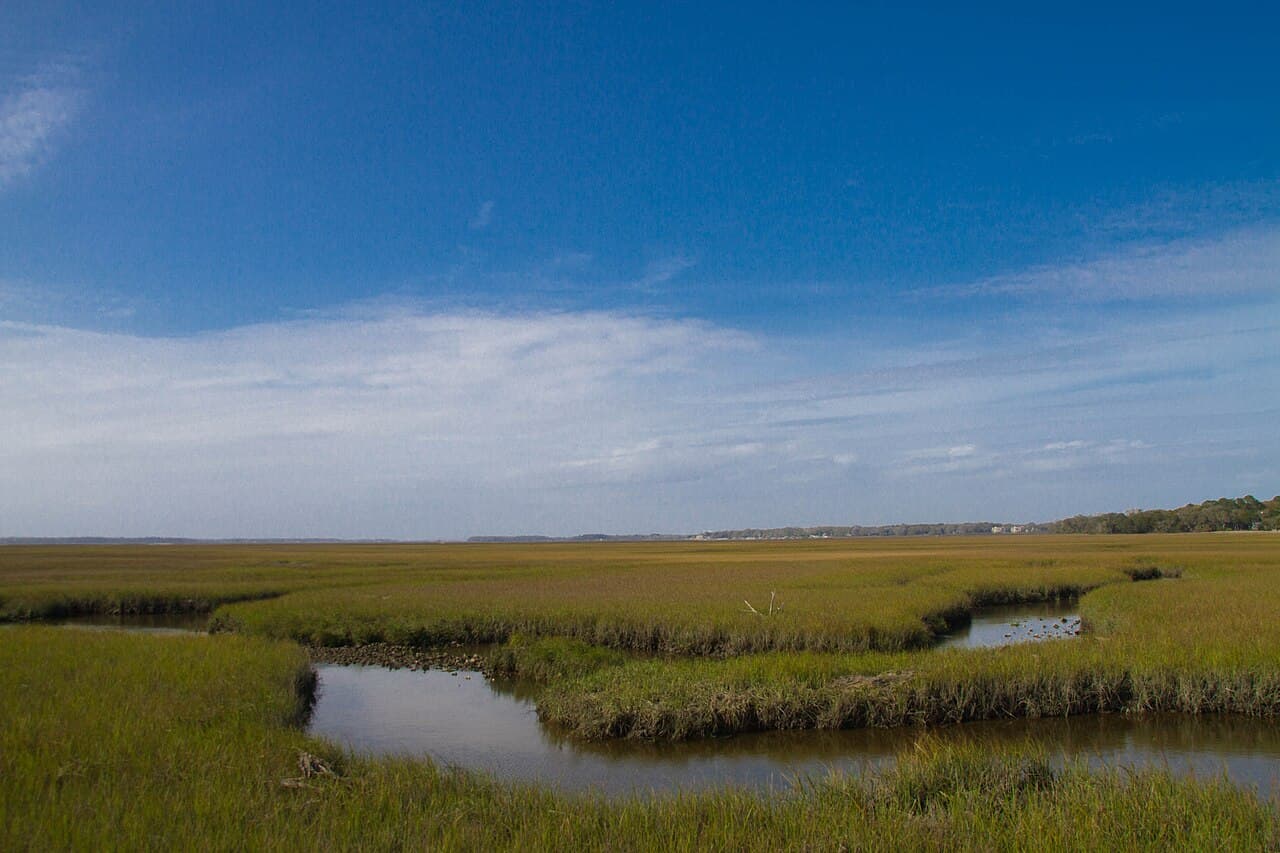
Photo by Razvan Orendovici on Wikimedia Commons · CC BY 2.0
Amelia Island's north end has one famous attraction with a gate and an entry fee, and one with neither. Fort Clinch gets the postcards. A couple of minutes back down the same road, Egans Creek Greenway is more than three hundred acres of salt marsh, tidal creek and maritime forest, with four miles of grass trail through it, and it costs nothing at all.
Its full official name is the RON SAPP Egans Creek Greenway. That's what the City's park listing calls it. We'll shorten it from here.
What it actually is
The Greenway is a City of Fernandina Beach park, managed by the city's Parks and Recreation department, and it opened in 2000. The land was bought with money from the Florida Communities Trust and the City, and it was set aside deliberately as an undeveloped park for conservation and passive recreation. That phrase, "undeveloped," is the whole design brief. There is no visitor center. There is no paved perimeter loop, no concession stand, no playground.
What there is: old grass-covered roads that now serve as trails, flat and wide enough to walk two abreast or ride a bike. The Great Florida Birding Trail, which lists the Greenway as an official site, counts four miles of interconnecting walking and biking loops across the property.
Look at a map of Fernandina Beach and the reason the Greenway gets used the way it does becomes obvious. It sits inside the town, not out past it. The entrances are on residential streets, off a rec center parking lot, at the back of a hotel lot on Sadler Road. Some parks you drive to for the day. This one you can walk into from the neighborhood streets that border it, which is a different kind of park entirely.
The north half and the south half are two different walks
This is the single most useful thing to know before you park, because the two ends of the Greenway offer genuinely different scenery and the choice is yours to make.
North, between Jasmine Street and Atlantic Avenue, is salt marsh and maritime forest. The City describes this stretch as offering excellent opportunities for watching wading birds, and names herons, egrets, wood stork and seasonal roseate spoonbills. There's a wildlife-viewing platform overlooking the salt marsh near Atlantic Avenue, which is the obvious place to stop and stand still for a while. If you came for the wide-open marsh view, the tidal creeks, the birds standing in the shallows, go north.
South, from Jasmine Street toward Sadler Road, the character changes to what the City calls a more forested, freshwater ecosystem. More cover, more shade, less horizon. Two bridges cross the creek at the Beech and Hickory Street extensions, and those bridges are the natural turning points for a shorter walk.
Neither half is better. If you have an hour, take the north half. If it's July at two in the afternoon and you want tree cover, take the south.
The birding, which is the real reason people come back
Over 200 species of birds have been recorded here. The Great Florida Birding Trail's site page names Wilson's Snipe, Short-billed Dowitcher, Greater Yellowlegs, Wood Stork, Green Heron and the occasional Roseate Spoonbill among the regulars and the possibles. Winter brings Swamp Sparrows and Ruby-crowned Kinglets. Migration seasons bring Yellow Warblers and Indigo Buntings.
The same page notes that the loops "provide plenty of action fall through spring," which is a useful sentence for anyone deciding when to come. It also fits how the island works generally: the shoulder months are cooler, less crowded, and cheaper to book, and they happen to be the months the birds are busiest.
You don't need to be a birder to get something out of this. A wood stork is unmistakable at fifty yards, all bald head and heavy bill. A roseate spoonbill, if one turns up, is a shocking pink thing that looks like it wandered off from a different continent. Bring binoculars if you own a pair. If you don't, the wading birds along the marsh edge are large and unbothered enough to enjoy without them.
Alligators, snakes, and the case for staying on the trail
This is a Florida marsh preserve, and the City is direct about what that means. From the Greenway brochure: "Please follow caution signs and do not approach or feed the alligators or other wildlife, and be on the lookout for various kinds of snakes." The same document asks visitors to stay on the mapped trails, both for their own safety and for the animals', noting that wild animals may react defensively or take flight if approached too closely.
The list of natural hazards it publishes is worth reading once before you go: stinging or biting insects, alligators, snakes, thorny vines, poison ivy, overhanging limbs.
None of this is a reason to skip the Greenway. It's a reason to keep the dog leashed, keep small children on the trail rather than at the water's edge, and treat an alligator sunning itself as scenery rather than a photo opportunity to get closer to.
The four ways in
There are four trailheads, and which one you choose determines what kind of walk you get.
- Atlantic Recreation Center, 2500 Atlantic Avenue. The main trailhead, with parking in the rec center lot and a restroom at the Nature Pavilion. This is the one to use if it's your first visit, and it puts you straight into the salt marsh end.
- Two entrances on Jasmine Street. Parking here is along the street right-of-way. Jasmine Street is roughly the hinge between the marsh half and the freshwater half, which makes it the practical choice if you want to sample both.
- Citrona Drive, reached by way of the Beech and Hickory Street extensions, near where the two creek bridges are.
- Sadler Road behind the Residence Inn at 2301 Sadler Road, where a raised boardwalk carries you back into the Greenway. Parking is behind the building. This is the south end, the forested end.
One access note straight from the City, worth repeating because it changes plans for some visitors: "The ADA Van is not currently available."
The practical details
- Cost: free.
- Hours: open sunrise to sunset, no overnight use. Year-round, with no seasonal closure.
- Surface: grass-covered roads, flat, described by the City as ideal for walking and bicycling.
- Dogs: welcome, leashed and controlled, and you pack out what they leave.
- Not allowed: motorized vehicles, fireworks, alcohol, hazardous materials and fires. Stay on the mapped trails, pack out your trash, keep the noise down.
- Fishing: permitted from the bridges with a shoreline license.
- Guided or commercial tours: must be pre-approved in advance through the City at 904-310-3350, extension 1.
Getting there from Yulee
From our lot it's State Road 200 east across the Shave Bridge, which is a good preview of the landscape you're driving toward, then A1A as it becomes 8th Street in Fernandina Beach. For the main trailhead, turn right on Atlantic Avenue and watch for the Atlantic Recreation Center on your right before you reach the beach. For the south end, stay on Sadler Road instead and look for the Residence Inn at 2301.
Call it fifteen miles and about twenty-five minutes. It's one straight road with one turn that matters, and it's the same drive you'd make for Fort Clinch, downtown Fernandina or the beach, which is the argument for basing on the mainland in the first place. You're not paying island rates for a room you leave at eight in the morning anyway. Free parking at the hotel end, free trail at the other.
Tips worth knowing before you go
Go early, or go in the last hour of light. The hours are sunrise to sunset, and both ends of that window are better than the middle: cooler, better light across the marsh grass, and more bird activity. Summer midday on an open grass road with no shade is a slog.
Photograph the trailhead map. No loop-by-loop distances are published anywhere, by the City or by the state birding program. The four-mile figure is a total for the whole interconnecting network, not a route you can follow. If you want to control how far you walk, go out and back to a landmark you pick, like one of the creek bridges or the viewing platform, rather than committing to a loop whose length you're guessing at.
Bug spray is not optional. It's a marsh. The City's own hazard list starts with stinging and biting insects.
Bring water. Nothing is sold inside the Greenway, and the restroom the City names is the one at the Nature Pavilion by the main trailhead. Plan around that if you're starting from Jasmine Street or Citrona Drive.
Bikes work well here. Flat grass roads, four miles of them, and no cars.
Fall through spring is the season the birding people point to. If your dates are flexible and the birds are the draw, that's the window.
What pairs well with it
The Atlantic Avenue trailhead sits a couple of minutes short of the Fort Clinch State Park gate, which makes the obvious morning: a marsh walk while it's still cool, then the fort. Our Fort Clinch guide covers the fee, the first-weekend reenactments and the shark-tooth beach in detail.
From either the Atlantic Avenue or Jasmine Street end, downtown Fernandina Beach is a short drive for lunch, and the Sadler Road end puts you near the Publix plaza, which is where we send guests for picnic supplies. More options on our things to do page and, for where to eat afterward, our dining guide.
If you're building a whole day, the full Amelia Island day trip from Yulee puts the pieces in order.
The short version
Free, open every day from sunrise to sunset, four miles of flat grass trail through salt marsh and forest, four ways in, dogs welcome on a leash, over 200 species of birds, alligators that you leave alone. About twenty-five minutes from our front door. For a place with no gate and no admission, it holds up against anything on the island you have to pay for.
Planning a trip built around the island's outdoors? Check availability or call the front desk at (904) 225-0182. Our current offers are worth a look if your dates are flexible. The marsh is the City of Fernandina Beach's to maintain. The hot breakfast before you head out there is ours.
FAQ
Common questions.
Is Egans Creek Greenway free, and what are the hours?
Free, with no gate and no entry booth. The City of Fernandina Beach, which manages the Greenway through its Parks and Recreation department, lists the hours as open sunrise to sunset with no overnight use. There is no seasonal closure, so the trails are available year-round.
Where do you park at Egans Creek Greenway?
The City lists three places: the Atlantic Recreation Center parking lot at 2500 Atlantic Avenue, along the right-of-way on Jasmine Street, and behind the Residence Inn on Sadler Road. There are four trailheads in total, the fourth being on Citrona Drive by way of the Beech and Hickory Street extensions.
How long are the trails at Egans Creek Greenway?
The Great Florida Birding Trail describes four miles of interconnecting walking and biking trail loops. Neither the City nor the state program publishes a loop-by-loop mileage breakdown, so the four miles is a total rather than a route. Photograph the map at the trailhead, or walk out and back to a landmark you choose so you know exactly how far the return is.
Are there alligators at Egans Creek Greenway?
Yes. The City's brochure asks visitors to follow the caution signs, not to approach or feed alligators or other wildlife, to watch for snakes, and to stay on the mapped trails. It also flags stinging and biting insects, thorny vines, poison ivy and overhanging limbs as ordinary hazards here. Sensible behavior covers all of it.
Can you bring dogs to Egans Creek Greenway?
Yes. The City's wording is that dogs are welcome providing they are leashed and controlled, and waste is not left on the trails. The leash rule is doing real work in a place with alligators in the water, so keep the dog close and off the creek banks.
Planning a trip to the First Coast?
We’re about twenty-five minutes from Amelia Island’s beaches and thirteen miles from the Jacksonville airport.
Check Availability