Listicle
9 min read
7 Reasons to Visit Amelia Island in the Fall
The ocean is still in the low 80s after the summer holiday, October runs drier and cooler than September, and the turtle nests stay staked out to the end of the month. Seven honest reasons the island is better in fall, plus the three things fall doesn't fix.
Edited by First Coast Inn Editorial Team
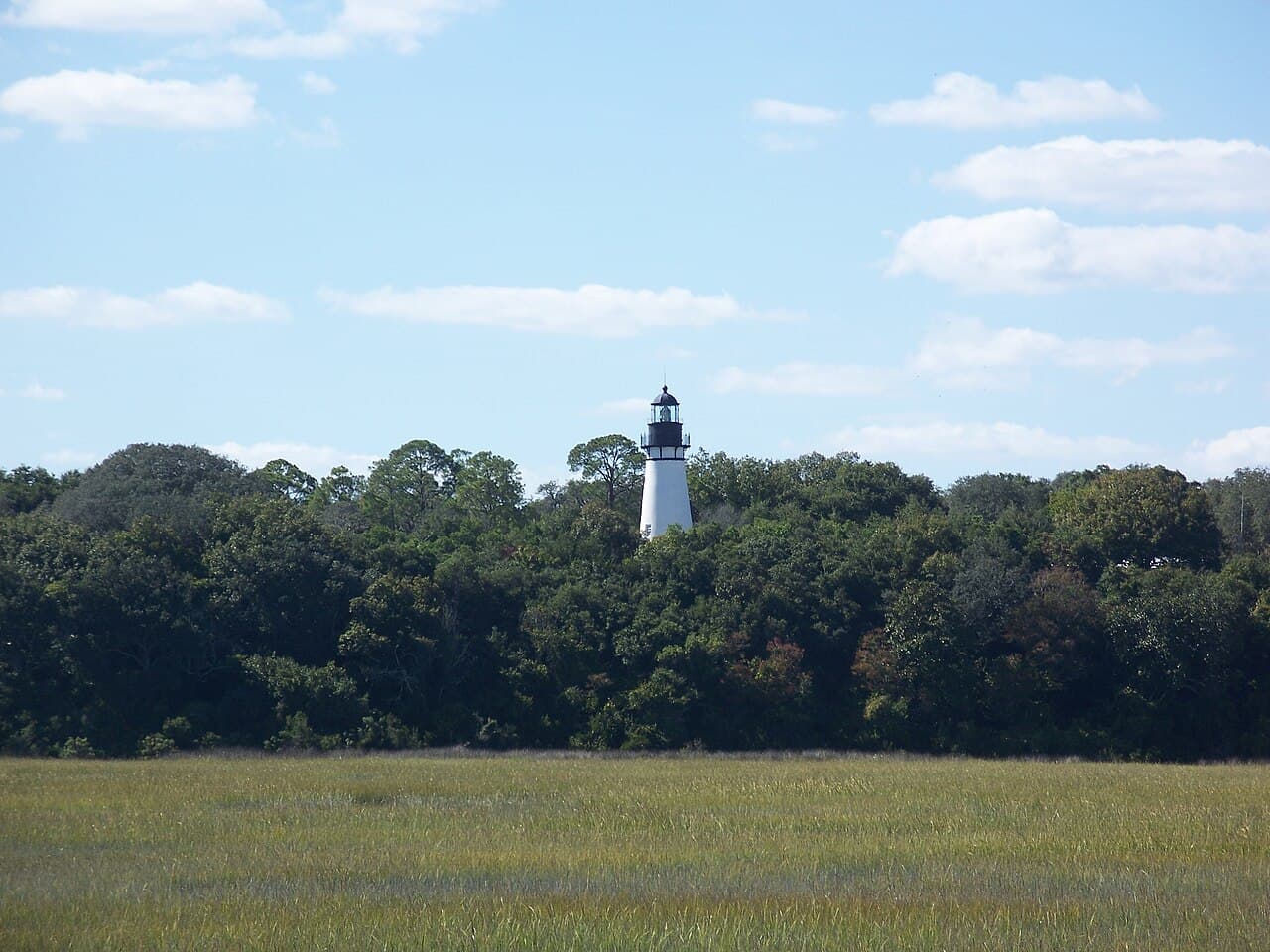
Photo by Ebyabe on Wikimedia Commons · CC BY-SA 3.0
Ask around about when to come to Amelia Island and the answer usually lands in spring. Spring is when the Shrimp Festival takes over downtown, when the rest of the country remembers Florida exists, and when the island's rate calendar reflects both. Fall gets skipped, mostly by accident. School starts, the beach trip gets filed away until next June, and nobody stops to check whether the water actually cooled off.
It didn't. That is the short version of this entire post, and it's the fact that reorganizes everything else.
We're on the Yulee side of the bridge, about twenty-five minutes from the sand, which means we watch the same handover every year: the summer holiday passes, the beach parking gets easier, and the Atlantic keeps doing exactly what it was doing in August. Below are the seven reasons we'd point a first-timer at fall, with the numbers where numbers exist and a plain admission where they don't.
1. The ocean is still warm, and not marginally
NOAA's tide station at Fernandina Beach records water temperature around the clock, which takes the guesswork out of this one. September monthly means in recent years have landed between 81 and 83°F. That is warmer than a lot of hotel pools, and it is the single most under-known fact about this coast.
The mechanism is straightforward once you think about it. Water holds heat far longer than air does, so the ocean lags behind the calendar by weeks. Air temperatures start easing in September while the Atlantic is still carrying everything it absorbed in July and August.
October cools to roughly 75°F. Most people still swim in that. Anyone who runs cold will want a rash guard by the back half of the month, and by November you're into the wading-and-shell-hunting phase of the year. But the idea that the beach season ends with the summer holiday is a calendar habit, not a temperature reading.
2. The sand empties out, and we're not going to pretend to measure it
This is the one item here without a number behind it, and we'd rather say so than invent one. Demand on this island is built around summer and the big May festival weekend. When school starts, things get quieter. That is what everyone who lives here will tell you, and it matches what we see at the front desk, but we can't hand you a percentage and neither can anyone else who's trying to rent you a room.
Rates tend to follow the same curve in most beach towns. Tend to. Compare your own dates rather than taking our word for it, and remember that event weekends are their own thing. A quiet island on a Tuesday in October says nothing about the Saturday of the half marathon.
If a quiet beach is the actual point of the trip, the lever that works regardless of season is arriving mid-week. Sunday through Thursday changes the character of Main Beach, of the Centre Street sidewalks, and of the wait for a table at the places that don't take reservations. It's a bigger effect than the month you pick.
3. October is the drier, cooler month, and the gap is wider than you'd guess
Here's where fall stops being one season and starts being two different trips.
At the Fernandina Beach station, September averages a high of 86°F and 7.19 inches of rain, which makes it the wettest month on the local calendar. October averages 80.1°F and 4.97 inches. Six degrees of air and better than two inches of rain, one month apart. You feel that difference on a walk down Centre Street at two in the afternoon.
What you give back is water temperature: about 82°F in September, about 75°F in October. So the choice is clean. Come early in the fall for the best swimming of the year and accept a wet afternoon or two. Come in October for the better sky and a slightly braver first step into the surf. Both are defensible. Neither is a compromise in the way a February beach trip is.
4. Turtle season overlaps the whole thing
Sea turtle nesting season on Amelia Island runs May 1 through October 31 under Nassau County ordinance, and hatchlings are still working their way out of the dunes deep into the fall. The nests are staked, marked and monitored, and once you know what the little enclosures are, you start seeing them everywhere along the dune line.
Two honest caveats. First, there is no published peak hatching week here. If a source tells you which night to be on the beach, they're guessing. Treat a sighting as luck, not an itinerary item. Second, the season carries rules that apply to you whether you care about turtles or not: no fires on the sand, no white flashlights after dark (a red filter is fine), and a wide berth around any marked nest. If your window faces the water, keep the curtains drawn at night. Hatchlings navigate by the brightest thing on the horizon, and a beachfront lamp beats the ocean every time.
5. September is Dining Month, which is the island's best-kept value
Every September, restaurants across Amelia Island run special menus for the month, usually a fixed-price format. It is the one time of year when the kitchens that normally sit at the top of the price range become approachable, and because it lasts a full month instead of a weekend, you don't have to schedule your trip around it.
The participating list changes year to year and gets posted on the island's tourism site each season, so we're not going to print a menu here that'll be wrong by next fall. What holds is the strategy: book the two restaurants you actually want on a weeknight, walk to the rest, and let the rest of the trip be barbecue and shrimp baskets. Our ranked list of the eight places we actually send guests covers that second half, and the dining page has the current lineup with live ratings.
6. The fall calendar is unusually full for a town this size
Downtown Fernandina keeps Sounds on Centre going through October. Around it, the fall stretch carries the Island Hop Craft Beer & Spirits Fest, the Amelia Island Half Marathon, the 8 Flags Car Show, Taste of Amelia and Barktoberfest.
Dates move year to year, so the two calendars worth bookmarking are ameliaisland.com and Fernandina Main Street. Check them once you've picked your dates rather than the other way around. The half marathon is the only one on that list you'd need to sign up for in advance. The rest you walk into.
Barktoberfest is worth flagging for a specific kind of traveler: we take dogs, so if the event is what's bringing you, the logistics work from our side of the bridge. Call the front desk at (904) 225-0182 for the current pet policy before you book.
7. The outdoor half of the island becomes usable again
In August, walking the parade ground at Fort Clinch at midday is less a historic site visit than an endurance test. At 80°F with a breeze off the river, it's one of the best half days on the First Coast: brick ramparts, a three-mile park road under a canopy of wind-sculpted live oaks, and beaches on two sides that give up shark teeth. We wrote a full guide to Fort Clinch because guests ask about it more than anything else on the island.
The fort is only the headline. It sits inside 1,400 acres of dunes, maritime forest and quiet shoreline at the island's north tip, including a six-mile off-road bike loop that is a genuinely different proposition in October than it is in July. That acreage is the part most visitors skip in summer, for the obvious reason.
The same math applies to everything that involves being outside and moving. Egans Creek Greenway, the shops and side streets of downtown Fernandina, a bike, a long beach walk that doesn't turn into a search for shade. Summer here rations outdoor time to mornings and evenings. Fall hands the middle of the day back. The things-to-do page has the full menu, and if this is your first trip, start with the first-timer's guide.
What fall doesn't fix
Three things, stated plainly, because a list of reasons that ignores the counterarguments isn't worth much.
Hurricane season. The Atlantic season runs through November 30 and its statistical peak falls in early-to-mid September, which is to say directly on top of the warmest water of the year. That's a real consideration and not a reason to write the season off. Tropical systems appear on the National Hurricane Center's map days ahead, not hours. Book a rate whose cancellation terms you've actually read, look at the forecast in the week before you travel, and decide with current information. Our fuller weather-and-booking breakdown works through the specifics.
Unguarded beaches. Nassau County's lifeguard season ends with the Labor Day holiday and doesn't resume until spring. Every beach on the island is unguarded for the whole of fall. It doesn't mean stay out of the water. It means swim where other people already are, keep kids within arm's reach instead of shouting distance, and check the rip current forecast before anyone gets in.
Rain, in the early part. September is the wettest month here. An average is a monthly total and not a schedule, so it can't tell you whether your particular week gets soaked. Carry a rain shell, keep one indoor option in reserve for each day, and let the radar pick your beach hours.
How we put this list together
The temperature and rainfall figures come from NOAA's long-term normals for the Fernandina Beach station, and the water temperatures from the NOAA tide station at the same location. Turtle nesting dates come from the Nassau County ordinance and Amelia Island Sea Turtle Watch. The events are the ones that recur on the island's own tourism calendar and Fernandina Main Street's, which is why we've named them without dating them.
Where we couldn't source something, we've said so rather than rounding it into a fact. Crowd levels and shoulder-season rates are impressions, clearly labeled. There is no peak hatching week in this post because there is no peak hatching week we can point you to.
Where we fit into it
Our position is easy to state: we're in Yulee, on the mainland, about 15 miles and twenty-five minutes east on State Road 200 from Fernandina Beach and the island's sand. We are not beachfront and never claim to be. What that geography buys in fall is a shorter list of compromises than you'd expect. Free hot breakfast before the drive over, free parking with room for a truck or a bike rack, an outdoor pool for the afternoon you come back sunburned, and about 13 miles between the front door and Jacksonville International if you're flying.
The money you don't spend on an island room in October is the money that pays for the Dining Month reservation. That's the whole argument for basing here, and it holds up best in exactly this season.
Planning a fall trip? Check availability or call the front desk at (904) 225-0182. We'll tell you which beach access has parking that day.
FAQ
Common questions.
Is fall a good time to visit Amelia Island?
It's arguably the best time. The ocean at the Fernandina Beach NOAA station has averaged 81–83°F in recent Septembers and holds around 75°F in October, so the water is still swimmable well past the summer holiday. October also averages an 80.1°F high and 4.97 inches of rain against September's 86°F and 7.19 inches, which makes it the drier, cooler half of the season. The trade-offs are real: fall sits inside hurricane season, and county lifeguards come off the beaches after the Labor Day holiday.
How warm is the ocean at Amelia Island in October?
Around 75°F, based on the NOAA tide station at Fernandina Beach. That's cooler than September, when monthly means have landed between 81 and 83°F, but it's still comfortable for most swimmers and easy in a rash guard or shorty for anyone who runs cold.
Is Amelia Island crowded in the fall?
Less than in summer, though we won't put a number on it. Beach and lodging demand here is built around summer and the island's big spring festival weekend, and things quiet down once school is back. That's a pattern rather than a promise, and event weekends still fill up, so compare your own dates before assuming a quiet island.
Can you see sea turtles on Amelia Island in the fall?
Possibly. Nesting season runs May 1 through October 31 under Nassau County ordinance, and hatchlings are still emerging from the dunes through the fall. There's no published peak hatching week, and nobody can tell you which night to show up. What you can reliably see are the staked and marked nests along the dune line. Give them a wide berth, skip beach fires, and keep white lights off the sand after dark.
What events happen on Amelia Island in the fall?
Sounds on Centre runs through October in downtown Fernandina, and the fall calendar also carries the Island Hop Craft Beer & Spirits Fest, the Amelia Island Half Marathon, the 8 Flags Car Show, Taste of Amelia and Barktoberfest. September is Dining Month, when restaurants across the island run special menus. Dates shift year to year, so check ameliaisland.com/festivals-events and fernandinamainstreet.com/events for the current schedule.
Planning a trip to the First Coast?
We’re about twenty-five minutes from Amelia Island’s beaches and thirteen miles from the Jacksonville airport.
Check Availability